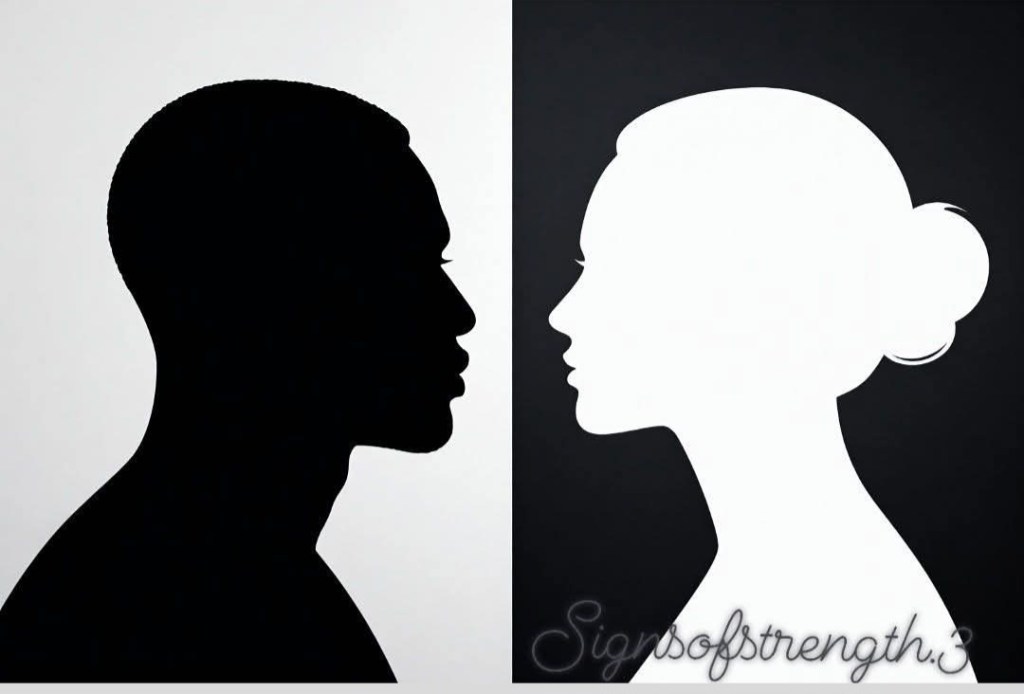
Let’s Talk About It:
Every time a Black man or Black woman dates outside their race, the internet turns into a town hall meeting nobody scheduled. Suddenly everybody has an opinion — even the people who swear they “don’t care.” Folks start projecting, debating, judging, and acting like love needs community approval before it can exist.
But here’s the real question:
Who actually gets to decide who someone loves — the person, or the people watching?
Because the truth is simple:
People date for connection.
The internet reacts from emotion.
And somewhere in the middle, the conversation gets messy.
And let’s be clear — this isn’t about being racist.
This is about culture, history, and the way certain choices hit old wounds we don’t always talk about.
The Narrative vs. The Reality
People love to throw out the same tired lines:
“Black women are too strong.”
“Black women got attitudes.”
“Black women don’t submit.”
But that’s not the real story — that’s the shortcut.
Here’s what’s actually going on:
- It’s not about Black women — America labels Black femininity as “too much” and white femininity as “soft.” That’s perception, not personality.
- Success changes the pressure — Some Black men feel like dating a white woman signals status because this country taught them whiteness = elevation.
- People project their insecurities — When a Black man dates outside his race, folks assume it’s a rejection of Black women, even when it’s not.
None of this is about Black women being “too strong.”
It’s about how America reads strength when it’s on a Black woman.
Why Black & White Dating Still Sparks Reactions
When a Black man dates outside his race — especially when he’s successful — it hits nerves:
- History — Black men were once punished for even looking at white women, while Black women were ignored or erased.
- Loyalty — Some Black women feel like, “We held you down… and now success means choosing someone else.”
- Visibility — Black women are often overlooked in media and dating spaces, so it stings deeper.
So when a successful Black man chooses a white woman, it doesn’t feel like “just dating.”
It feels symbolic — even if he didn’t mean it that way.
Where Dr. Umar Fits Into This Conversation
Dr. Umar Johnson is a well‑known Pan‑African psychologist who believes that marriage is a political act, not just a romantic one. He argues that when Black men marry outside their race, it weakens the collective strength of the Black community.
Whether people agree with him or not, he has become a symbol in these conversations.
That’s why every time a Black man dates a white woman — especially a successful one — the internet jokes:
- “Somebody check on Dr. Umar.”
- “Dr. Umar punching the air right now.”
- “Don’t let him see this.”
It’s not really about him.
It’s about what he represents:
- Protection of Black love
- Fear of cultural loss
- Historical trauma
- Community loyalty
He’s become the internet’s shorthand for the deeper tension people feel — the tension that shows up every time interracial dating hits the timeline.
Why Interracial Dating Still Explodes Online
Every time an interracial couple hits the timeline — celebrity or not — the internet acts like it’s been personally invited to judge, debate, and dissect the relationship. It doesn’t matter if it’s Jamie Foxx announcing a baby, a TikTok couple posting a dance, or a random photo going viral. The reaction is instant, emotional, and loud.
Why?
Because interracial dating isn’t just about two people.
Online, it becomes a symbol — a trigger — a cultural flashpoint.
Here’s what really makes it explode:
- People react to the history, not the couple
- Everyone brings their own wounds
- Social media rewards outrage
- Interracial dating exposes insecurities
- It challenges the idea of “ownership” in the Black community
So when Jamie Foxx made his announcement, it wasn’t him that caused the explosion — it was everything people already felt, carried, and feared.
He was just the spark.
The fire was already there.
The Viral Post Everyone’s Talking About
Recently, a headline started circulating online claiming that a group of white women were “coaching each other” on how to secure Black athletes. The post went viral instantly — not because people knew the full story, but because the headline hit every emotional trigger at once.
It stirred up:
- Old fears
- Old wounds
- Old stereotypes
- Old narratives
Whether the story was true, exaggerated, or taken out of context didn’t even matter — the headline alone was enough to set the internet on fire.
These viral posts don’t create the tension.
They expose the tension that’s already there.
When Black Women Date White Men — The Double Standard
Here’s the part people pretend not to see:
Black women get attacked too when they date white men. And the criticism hits different — not because of who they’re dating, but because of what people think it means.
People start assuming:
- “She gave up on Black men.”
- “She thinks she’s better now.”
- “She only wants a white man for stability.”
- “She’s trying to level up.”
But most Black women who date outside their race aren’t making a political statement.
They’re choosing someone who treats them well.
So why does it spark so much noise?
Because it touches:
- Ownership
- Expectations
- Projection
- Visibility
When Black men date white women, people call it a “pattern.”
When Black women date white men, people call it a “betrayal.”
Same situation.
Different judgment.
Same double standard.
Black women deserve the same freedom everyone else has:
the freedom to choose love without being punished for it.
What the Bible Actually Says About Interracial Dating
Let’s clear this up, because people love to throw the Bible into conversations it was never confused about.
The Bible does not condemn interracial dating or interracial marriage.
Not once.
Not anywhere.
Here’s what Scripture does emphasize:
Spiritual compatibility matters more than skin color
When the Bible talks about being “unequally yoked,” it’s talking about faith, not ethnicity.
It’s saying:
Don’t build a life with someone who doesn’t share your spiritual foundation.
That’s about belief — not race.
God looks at character, not ethnicity
From Genesis to Revelation, the focus is always on:
- the heart
- the character
- the fruit of someone’s life
- the alignment of values
Not the shade of their skin.
The Bible actually includes interracial marriages
People forget this part:
- Moses married a Cushite woman — and when his family criticized it, God checked them, not him.
- Boaz married Ruth, a Moabite woman — and their lineage leads straight to King David and Jesus.
If interracial marriage was a sin, Jesus Himself would not come from a multi‑ethnic bloodline.
So no — interracial dating is not unbiblical.
What’s unbiblical is using Scripture to justify personal discomfort.
So… Who Gets to Decide?
At the end of the day, the answer is simple:
The people in the relationship.
Not the internet.
Not the community.
Not the comments.
People are allowed to love who they love.
And the community is allowed to feel what it feels.
Both can exist at the same time.
This isn’t about hating anybody.
This isn’t about racism.
This is about culture, history, and the way certain choices hit nerves that were formed long before social media existed.
What matters is that we talk about it honestly — without stereotypes, without shortcuts, and without pretending the reactions come from nowhere. Because when we understand the roots, the conversation gets clearer, softer, and a whole lot more real.
And that’s why we’re here.
To talk about it.
To unpack it.
To understand it.
Closing Word
May we all learn to love with clarity, not confusion.
With honesty, not fear.
With understanding, not assumptions.
Closing Prayer
God, give us the wisdom to see people the way You see them —
beyond color, beyond culture, beyond assumptions.
Teach us to love with clarity, not confusion.
To honor history without letting it harden our hearts.
To choose connection without fear, and truth without judgment.
Cover our families, our communities, and our conversations
as we navigate topics that are bigger than us
but necessary for all of us.
Amen.