Tag: god

  • Let’s Talk About Fatherhood

    ​A Father’s Day Conversation We Don’t Have Enough

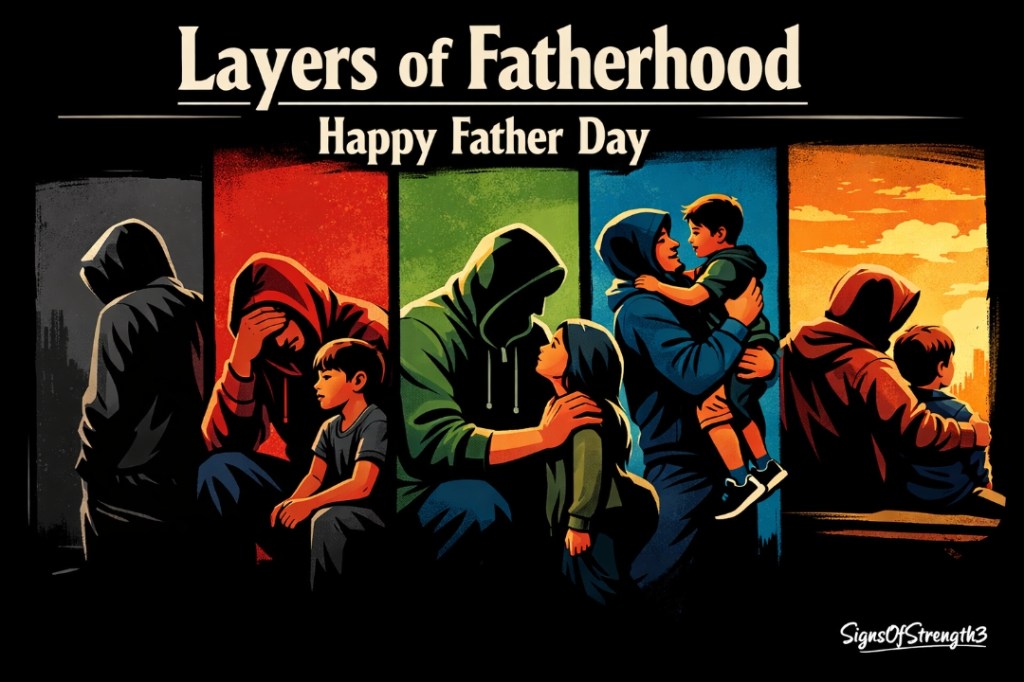
    Fatherhood is layered, emotional, complicated, and sacred. As Father’s Day comes around, men feel it in different ways — some with pride, some with regret, some with silence, and some with a heaviness they don’t talk about out loud. This day has a way of making men look back, not at the gifts or the cookouts, but at the choices they made… and the ones they didn’t.

    I’ve spoken with five men — some active fathers, some stepfathers, and some estranged from their children — and every single one admitted that Father’s Day hits differently. It exposes the gap between who they are and who they wanted to be. And that’s where this conversation begins.


    The Layers of Fatherhood

    Fatherhood isn’t one-dimensional. It’s a spectrum:

    • The biological father
    • The active father
    • The absent father
    • The stepfather who becomes the real father
    • The man who wants the title but not the work
    • The man who does the work but never gets the title

    Some men are fathers by blood.
    Some are fathers by heart.
    Some are fathers only by name.

    And the truth is, children know the difference.


    Why Some Men Get Labeled “Deadbeat”

    The term “deadbeat daddy” didn’t come from thin air. It came from patterns:

    • Men who disappear when responsibility shows up
    • Men who want praise without participation
    • Men who father children but don’t father lives
    • Men who leave the emotional and financial weight on the mother

    When a father doesn’t show up, the child pays the price — not the mother.
    And that’s why the label sticks.

    Why Your Role Matters

    A father shapes:

    • Identity
    • Confidence
    • Emotional stability
    • Discipline
    • Safety
    • Self-worth

    A father’s presence teaches a child how to love.
    A father’s absence teaches a child how to survive.

    Children don’t forget who showed up.
    They also don’t forget who didn’t.


    Why Some Stepfathers Become the Real Fathers

    Some stepfathers go harder than biological fathers ever did.

    Michael Sterling is a perfect example — he didn’t just “take on” a child.
    He claimed her.
    Loved her.
    Raised her.
    Protected her.
    And she became his daughter.

    Because fatherhood is not DNA.
    It’s devotion.

    Some men step up.
    Some men step back.
    And some men step away.


    Why Mothers Carry the Heavier Load

    Percentage-wise, mothers carry:

    • More physical responsibility
    • More emotional responsibility
    • More financial responsibility
    • More daily decision-making
    • More sacrifice

    Not because they want to.
    But because they have to.

    When fathers fall short, mothers stretch themselves thin.
    When fathers disappear, mothers double up.
    When fathers delay, mothers deliver.


    What the Bible Says About Fathers

    In Scripture, “father” means:

    • Source
    • Protector
    • Leader
    • Provider
    • Teacher

    The four core duties of a father:

    1. Provide — financially and emotionally
    2. Protect — physically and spiritually
    3. Guide — through discipline and example
    4. Model — character, integrity, and love

    Broken Father–Child Relationships: How to Rebuild

    Some fathers are estranged.
    Some are ashamed.
    Some don’t know where to start.

    Healing begins when pride ends.

    To rebuild:

    • Acknowledge the hurt
    • Take responsibility without excuses
    • Apologize without defending yourself
    • Be consistent, not convenient
    • Show up even when it’s uncomfortable
    • Give the child space to feel
    • Understand trust must be earned, not demanded

    Some fathers need to lower their wings — stop acting like they’re above accountability — and face the truth of their role in the distance.

    Why Some Stepfathers Outperform Biological Fathers

    Because they choose the child.
    Not out of obligation.
    Not out of guilt.
    But out of love.

    A stepfather often:

    • Shows up without being asked
    • Loves without conditions
    • Provides without reminders
    • Protects without hesitation
    • Builds without needing credit

    Some men father children they didn’t create.
    Some men create children they don’t father.

    How Fathers Can Be Better Moving Forward

    Growth starts with honesty.

    To be better:

    • Be present
    • Be consistent
    • Be accountable
    • Be teachable
    • Be emotionally available
    • Be financially responsible
    • Be a safe place
    • Be a leader, not a dictator

    Children don’t need perfection.
    They need effort.


    A Final Word on Fatherhood

    Fatherhood is not about perfection — it’s about presence. It’s about choosing to show up even when you weren’t shown how. It’s about breaking cycles you didn’t create but refuse to pass down. It’s about healing the boy inside you so you can raise the child in front of you.

    Some men are celebrating today.
    Some are grieving today.
    Some are reflecting today.
    Some are rebuilding today.

    And some are finally ready to admit:

    “I could’ve done better. I still can.”

    Fatherhood is a journey — not a moment.
    A responsibility — not a title.
    A legacy — not a holiday.

    Whether you’re a biological father, a stepfather, a spiritual father, or a man trying to find his way back — your role matters more than you know.

    A Prayer for Fathers

    Father God,
    Today we lift up every man wearing the weight of fatherhood — the proud ones, the broken ones, the distant ones, and the ones trying to find their way back. Strengthen the men who are doing the work. Heal the men who are hurting. Restore the men who feel disconnected from their children. Give them courage to apologize, humility to rebuild, and wisdom to lead with love.

    Cover every child who longs for their father’s presence.
    Cover every mother carrying more than her share.
    Cover every stepfather who stepped in with a full heart.
    And cover every man who desires to be better than he was yesterday.

    Lord, teach fathers to protect, provide, guide, and love the way You do — with patience, with grace, and with consistency.
    Let healing begin where silence once lived.
    Let restoration begin where pride once stood.
    And let love rewrite every story that started with pain.

    Amen.

  • Honoring Juneteenth

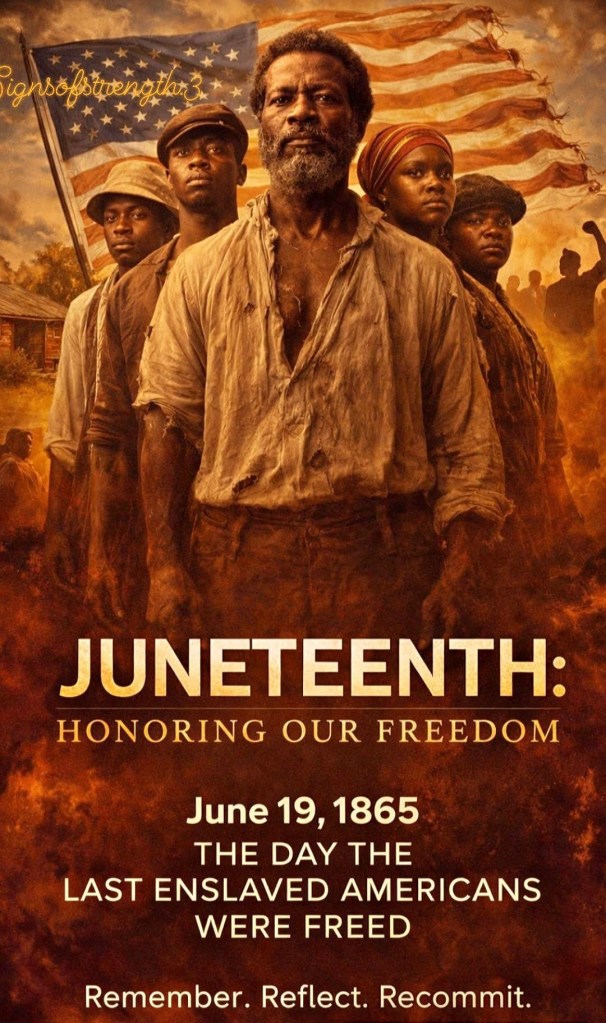
    Freedom didn’t arrive all at once — but when it came, it changed everything.

    Today we remember June 19, 1865, the day the last enslaved men and women in Galveston, Texas finally heard the words that should have reached them years earlier:

    You are free!!!!!!!!!!!!!!!!!!!!!!!!!!

    Juneteenth is more than a date.It is a testament to resilience, a celebration of survival, and a call to continue the work our ancestors began.

    We remember their struggle.We reflect on their strength.We recommit to their legacy.

    May we honor them not only with celebration, but with action — in our communities, in our families, and in the way we show up for justice, dignity, and each other.

  • Black & White: Dating — Who Gets to Decide?


    Let’s Talk About It:

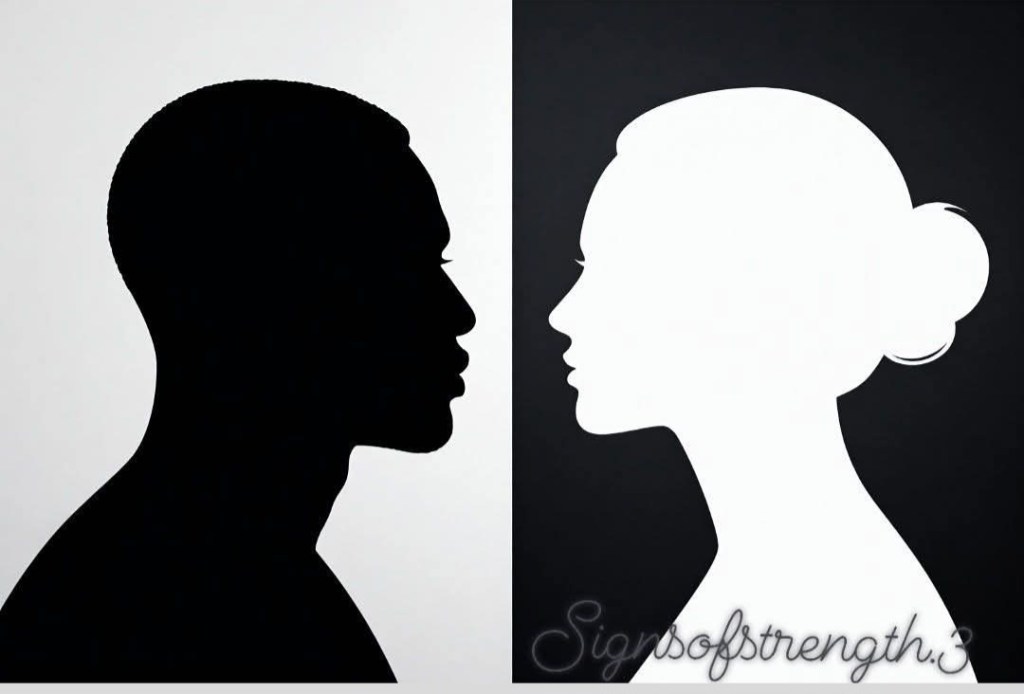
    Every time a Black man or Black woman dates outside their race, the internet turns into a town hall meeting nobody scheduled. Suddenly everybody has an opinion — even the people who swear they “don’t care.” Folks start projecting, debating, judging, and acting like love needs community approval before it can exist.

    But here’s the real question:

    Who actually gets to decide who someone loves — the person, or the people watching?

    Because the truth is simple:
    People date for connection.
    The internet reacts from emotion.
    And somewhere in the middle, the conversation gets messy.

    And let’s be clear — this isn’t about being racist.
    This is about culture, history, and the way certain choices hit old wounds we don’t always talk about.


    The Narrative vs. The Reality

    People love to throw out the same tired lines:

    “Black women are too strong.”
    “Black women got attitudes.”
    “Black women don’t submit.”

    But that’s not the real story — that’s the shortcut.

    Here’s what’s actually going on:

    • It’s not about Black women — America labels Black femininity as “too much” and white femininity as “soft.” That’s perception, not personality.
    • Success changes the pressure — Some Black men feel like dating a white woman signals status because this country taught them whiteness = elevation.
    • People project their insecurities — When a Black man dates outside his race, folks assume it’s a rejection of Black women, even when it’s not.

    None of this is about Black women being “too strong.”
    It’s about how America reads strength when it’s on a Black woman.


    Why Black & White Dating Still Sparks Reactions

    When a Black man dates outside his race — especially when he’s successful — it hits nerves:

    • History — Black men were once punished for even looking at white women, while Black women were ignored or erased.
    • Loyalty — Some Black women feel like, “We held you down… and now success means choosing someone else.”
    • Visibility — Black women are often overlooked in media and dating spaces, so it stings deeper.

    So when a successful Black man chooses a white woman, it doesn’t feel like “just dating.”
    It feels symbolic — even if he didn’t mean it that way.


    Where Dr. Umar Fits Into This Conversation

    Dr. Umar Johnson is a well‑known Pan‑African psychologist who believes that marriage is a political act, not just a romantic one. He argues that when Black men marry outside their race, it weakens the collective strength of the Black community.

    Whether people agree with him or not, he has become a symbol in these conversations.

    That’s why every time a Black man dates a white woman — especially a successful one — the internet jokes:

    • “Somebody check on Dr. Umar.”
    • “Dr. Umar punching the air right now.”
    • “Don’t let him see this.”

    It’s not really about him.
    It’s about what he represents:

    • Protection of Black love
    • Fear of cultural loss
    • Historical trauma
    • Community loyalty

    He’s become the internet’s shorthand for the deeper tension people feel — the tension that shows up every time interracial dating hits the timeline.


    Why Interracial Dating Still Explodes Online

    Every time an interracial couple hits the timeline — celebrity or not — the internet acts like it’s been personally invited to judge, debate, and dissect the relationship. It doesn’t matter if it’s Jamie Foxx announcing a baby, a TikTok couple posting a dance, or a random photo going viral. The reaction is instant, emotional, and loud.

    Why?
    Because interracial dating isn’t just about two people.
    Online, it becomes a symbol — a trigger — a cultural flashpoint.

    Here’s what really makes it explode:

    • People react to the history, not the couple
    • Everyone brings their own wounds
    • Social media rewards outrage
    • Interracial dating exposes insecurities
    • It challenges the idea of “ownership” in the Black community

    So when Jamie Foxx made his announcement, it wasn’t him that caused the explosion — it was everything people already felt, carried, and feared.

    He was just the spark.
    The fire was already there.


    The Viral Post Everyone’s Talking About

    Recently, a headline started circulating online claiming that a group of white women were “coaching each other” on how to secure Black athletes. The post went viral instantly — not because people knew the full story, but because the headline hit every emotional trigger at once.

    It stirred up:

    • Old fears
    • Old wounds
    • Old stereotypes
    • Old narratives

    Whether the story was true, exaggerated, or taken out of context didn’t even matter — the headline alone was enough to set the internet on fire.

    These viral posts don’t create the tension.
    They expose the tension that’s already there.


    When Black Women Date White Men — The Double Standard

    Here’s the part people pretend not to see:
    Black women get attacked too when they date white men. And the criticism hits different — not because of who they’re dating, but because of what people think it means.

    People start assuming:

    • “She gave up on Black men.”
    • “She thinks she’s better now.”
    • “She only wants a white man for stability.”
    • “She’s trying to level up.”

    But most Black women who date outside their race aren’t making a political statement.
    They’re choosing someone who treats them well.

    So why does it spark so much noise?

    Because it touches:

    • Ownership
    • Expectations
    • Projection
    • Visibility

    When Black men date white women, people call it a “pattern.”
    When Black women date white men, people call it a “betrayal.”

    Same situation.
    Different judgment.
    Same double standard.

    Black women deserve the same freedom everyone else has:
    the freedom to choose love without being punished for it.


    What the Bible Actually Says About Interracial Dating

    Let’s clear this up, because people love to throw the Bible into conversations it was never confused about.

    The Bible does not condemn interracial dating or interracial marriage.
    Not once.
    Not anywhere.

    Here’s what Scripture does emphasize:

    Spiritual compatibility matters more than skin color
    When the Bible talks about being “unequally yoked,” it’s talking about faith, not ethnicity.
    It’s saying:
    Don’t build a life with someone who doesn’t share your spiritual foundation.

    That’s about belief — not race.

    God looks at character, not ethnicity
    From Genesis to Revelation, the focus is always on:

    • the heart
    • the character
    • the fruit of someone’s life
    • the alignment of values

    Not the shade of their skin.

    The Bible actually includes interracial marriages
    People forget this part:

    • Moses married a Cushite woman — and when his family criticized it, God checked them, not him.
    • Boaz married Ruth, a Moabite woman — and their lineage leads straight to King David and Jesus.

    If interracial marriage was a sin, Jesus Himself would not come from a multi‑ethnic bloodline.

    So no — interracial dating is not unbiblical.
    What’s unbiblical is using Scripture to justify personal discomfort.


    So Who Gets to Decide?

    At the end of the day, the answer is simple:

    The people in the relationship.
    Not the internet.
    Not the community.
    Not the comments.

    People are allowed to love who they love.
    And the community is allowed to feel what it feels.

    Both can exist at the same time.

    This isn’t about hating anybody.
    This isn’t about racism.
    This is about culture, history, and the way certain choices hit nerves that were formed long before social media existed.

    What matters is that we talk about it honestly — without stereotypes, without shortcuts, and without pretending the reactions come from nowhere. Because when we understand the roots, the conversation gets clearer, softer, and a whole lot more real.

    And that’s why we’re here.
    To talk about it.
    To unpack it.
    To understand it.


    Closing Word

    May we all learn to love with clarity, not confusion.
    With honesty, not fear.
    With understanding, not assumptions.


    Closing Prayer

    God, give us the wisdom to see people the way You see them —
    beyond color, beyond culture, beyond assumptions.
    Teach us to love with clarity, not confusion.
    To honor history without letting it harden our hearts.
    To choose connection without fear, and truth without judgment.
    Cover our families, our communities, and our conversations
    as we navigate topics that are bigger than us
    but necessary for all of us.
    Amen.

  • Human Desire vs. God’s Design: Let”s Talk About Hard Topics Without Hate

    We live in a world where feelings are loud and truth is often uncomfortable. Conversations about sexuality, identity, and desire can easily turn hateful, but God calls us to something higher. This message explores the tension between human desire and God’s design, the battle between flesh and Spirit, and how to speak truth with compassion. It’s a word for men, women, and youth—anyone who has ever felt pulled between what they want and who God created them to be.


    When Love Isn’t Really Love

    People often use the word “love” to describe situations that are not love at all. A woman being abused will say, “But he loves me,” but abuse is not love. Someone being cheated on will say, “I love him,” but betrayal is not love. A person stuck in a toxic cycle will say, “We love each other,” but toxicity is not love.

    This is the danger of following feelings. Feelings can lie. The flesh can lie. Desire can lie. Just because something feels like love does not mean it aligns with God’s definition of love.


    God’s Original Design

    From the beginning, God created male and female with intention. Their bodies complement each other. Their union produces life. Their covenant reflects Christ and the Church. Their design is purposeful, not accidental.

    Biblically, marriage is always described as man + woman. Not because God hates anyone, but because His design brings order, clarity, and life.


    What Scripture Says About Same‑Sex Behavior

    The Bible addresses same‑sex behavior directly in Leviticus 18, Leviticus 20, Romans 1, 1 Corinthians 6, and 1 Timothy 1. These passages do not discuss orientation—they address behavior, and they place same‑sex acts outside God’s design.

    This is not about attacking people. This is about acknowledging what Scripture teaches. Truth is truth.


    When the Heart Feels Torn

    Some people feel completely at peace with their sexuality. Others feel conflicted, confused, or spiritually torn.

    I’ve heard people say:

    • “I know it’s wrong, but it’s the flesh.”
    • “My desires don’t match my faith.”
    • “I feel pulled in two directions.”

    That kind of inner conflict is real. It doesn’t make someone evil—it makes them human.

    And Scripture reminds us: “God is not the author of confusion, but of peace.”

    Confusion comes from desire, pressure, trauma, fear, and internal battles. Peace comes from God.


    Why Some People Hide

    People hide things when they feel torn inside—cheating, addiction, lust, jealousy, pride, secret relationships. Not because they’re monsters, but because they’re hurting, confused, or afraid.

    Some hide because they fear rejection.
    Some hide because they feel spiritually conflicted.
    Every story is different.


    When Culture Redefines Love

    Culture says, “Love is love.”
    But the Bible says, “God is love.”

    Culture says, “If I feel it, it must be right.”
    But Scripture says, “The heart is deceitful.”

    Culture says, “Follow your desires.”
    But God says, “Walk by the Spirit, not the flesh.”

    Culture changes. God does not.


    The Battle Between Flesh and Spirit (Romans 7 + Galatians 5)

    Every believer knows this battle.

    Paul said: “The good I want to do, I don’t do. The evil I don’t want to do, that I keep on doing.”
    That’s the flesh.

    The flesh wants what feels good.
    The Spirit wants what honors God.

    Galatians 5 says: “The flesh desires what is contrary to the Spirit, and the Spirit what is contrary to the flesh.”

    This is why temptation feels strong.
    This is why obedience feels hard.
    This is why people feel torn.

    This is not a “gay issue.”
    This is a human issue.


    Love vs. Lust: Knowing the Difference

    The world confuses love with desire, attachment, trauma, loneliness, and lust. But the Bible separates love from lust.

    Lust is fast, emotional, flesh‑driven, self‑centered, temporary, and confusing.
    Love is patient, kind, sacrificial, covenant, truthful, and clear.

    Lust takes.
    Love gives.
    Lust confuses.
    Love clarifies.
    Lust is flesh.
    Love is Spirit.

    This message speaks to men, women, and youth—because all of us battle the flesh.


    Talking About Hard Topics Without Hate

    Truth without love becomes harsh.
    Love without truth becomes compromise.

    Jesus walked in both.

    When He corrected sin, He didn’t shame people.
    He didn’t attack people.
    He didn’t humiliate people.

    He spoke truth with compassion.

    He said, “Go and sin no more,” not “You’re worthless.”

    This is how believers must speak today—especially on topics like sexuality, identity, desire, and sin.

    The goal is not to win an argument.
    The goal is to win a soul.


    Every Journey Is Different

    Some feel convicted.
    Some feel confused.
    Some feel torn.
    Some feel at peace.

    Every person has a story.
    Every person has a journey.
    Every person deserves compassion.

    Our role is to love, pray, speak truth, stand firm, and walk in compassion.
    Because real love—God’s love—always leads us back to truth.


    Closing Prayer

    Father, thank You for being the God who brings clarity where there is confusion and peace where there is inner conflict. Thank You for creating us with purpose, identity, and design.

    As we face hard conversations in a world full of noise, give us the courage to stand on truth, the compassion to speak with love, and the humility to examine our own hearts before we correct anyone else.

    Strengthen us in the battle between flesh and Spirit. Help us choose Your way over our desires, Your voice over our feelings, and Your design over the patterns of this world.

    Heal the places in us that feel torn, confused, or broken. Bring conviction where we’ve compromised and restoration where we’ve drifted.

    Teach us to love like Jesus—with truth that frees and grace that restores.


    Amen.

  • Where Do All These Beliefs Come From?

    🌍

    A Sunday Conversation About Faith, Culture, and the Search for God

    “Lets Talk About It “

    📖 Scripture of the Day

    “The Lord looks at the heart.”

    — 1 Samuel 16:7  

    “For we walk by faith, not by sight.”

    — 2 Corinthians 5:7

    These two verses anchor everything we’re about to explore.

    What Is Religion, Really?

    Religion is often taught as a set of rules, rituals, and requirements. But at its core, it’s supposed to be a path — a way to connect with something greater. Somewhere along the way, many of us inherited beliefs without understanding their roots.

    Lets Get Into It “

    Table of Contents

    1. Why I Wrote This  

    2. My Personal Journey Through Faith  

    3. Before Religion Had Names  

    4. Is It All Man‑Made?  

    5. “Is Your Religion Better Than Mine?”  

    6. A Quick Look at a Few Traditions  

    7. So Where Did It All Start?  

    8. The Heart of the Matter  

    9. Closing Reflection  

    10. Prayer  

    🗣️ 1. Why I Wrote This

    Because too many people feel confused, judged, or silenced by religious expectations.  

    Because I’ve asked these questions myself.  

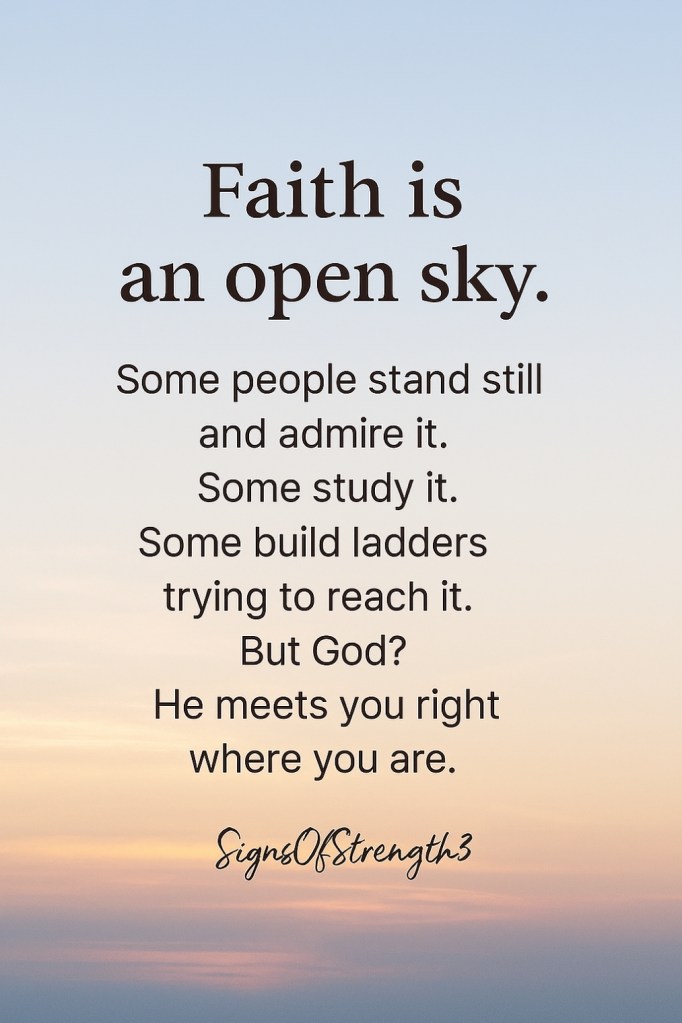
    Because God is bigger than our labels, louder than our traditions, and closer than we think.

    This is not a sermon — it’s a conversation.  

    A moment to breathe, reflect, and ask honestly:

    Where do all these beliefs come from?

    🌱 2. My Personal Journey Through Faith

    I grew up baptized and Methodist on both sides of my family, so Christianity was my foundation. It was familiar, it was home, and it shaped the earliest parts of my spiritual identity. But as I got older, something in me wanted more than routine. I didn’t just want to follow religion — I wanted to understand it.

    That desire pushed me into a season of exploration, not out of confusion, but out of curiosity and hunger for truth.

    For several months, I spent time at the temple.  

    It was peaceful, quiet, and centered on meditation, discipline, and giving.  

    Being there taught me how to slow down, breathe, and listen — not just to God, but to myself.  

    It showed me that peace is a spiritual language, and sometimes silence teaches more than sermons.

    I also visited the Catholic church, which felt both familiar and structured.  

    The reverence, the rituals, the consistency — it reminded me that faith can be sacred, steady, and rooted in tradition.  

    It helped me appreciate the beauty of spiritual discipline and the comfort of community.

    Then there was Islam, which drew me in because of its commitment to discipline — the prayer schedule, the structure, the way the body and spirit work together to honor God.  

    The dedication, the self‑control, the intentionality — it spoke to me in a way I didn’t expect.

    Each place taught me something different.  

    Each experience added another layer to my understanding.  

    And each tradition showed me a new way people reach for God.

    My journey wasn’t about switching religions.  

    It was about seeing God through different lenses and realizing that people everywhere are trying to reach the same Source — just in different ways.

    🧠 3. Before Religion Had Names

    Acts 17:26–27 reminds us that long before labels existed, humans had questions.

    People looked at the stars.  

    Felt joy, fear, loss, love.  

    Wondered why they were here.  

    Reached for God in the best way they knew how.

    Religion didn’t start with denominations.  

    It started with humans searching for meaning.

    🧭 4. Is It All Man‑Made? Or Did God Have a Hand in It?

    James 4:8 — “Draw near to God, and He will draw near to you.”

    People answer this differently:

    – Some believe God revealed Himself in different ways across cultures.  

    – Some believe religion is humanity’s attempt to understand God.  

    – Many believe it’s both.

    But one truth remains:

    People everywhere are trying to get closer to God — even if the paths look different.

    🧱 5. “Is Your Religion Better Than Mine?”

    Ephesians 4:3 — “Make every effort to keep the unity of the Spirit…”

    Most religions teach:

    – humility  

    – compassion  

    – discipline  

    – love  

    – service  

    – forgiveness  

    But humans turn it into competition.

    God didn’t create comparison — people did.

    Your walk is your walk.  

    Your growth is your growth.  

    Your connection is your connection.

    🌤️ 6. A Quick Look at a Few Traditions

    (Understanding, not comparing)

    Buddhism

    – Inner peace  

    – Compassion  

    – Ending suffering  

    Catholicism

    – Tradition  

    – Sacraments  

    – Reflection  

    – Community  

    Southern Baptist

    – Scripture  

    – Personal relationship with God  

    – Direct worship  

    Islam

    – One God (Allah)  

    – Prayer  

    – Charity  

    – Fasting  

    – Discipline  

    – Moral character  

    Different expressions.  

    Different histories.  

    Same desire to grow spiritually.

    🪨 7. So Where Did It All Start?

    It started with people trying to understand:

    – God  

    – life  

    – purpose  

    – suffering  

    – morality  

    – community  

    – eternity  

    Over time, understandings became traditions.  

    Traditions became religions.  

    Religions became cultures.

    Different paths.  

    Different practices.  

    Same human desire:

    To get closer to God.

    ❤️ 8. The Heart of the Matter

    John 4:24 — “Worship in spirit and truth.”

    God isn’t looking at labels.  

    He’s looking at hearts.

    Not “What religion are you?”  

    But “Are you growing?”

    Not “What denomination do you claim?”  

    But “Are you becoming better?”

    Not “What rules do you follow?”  

    But “Are you seeking truth?”

    Your journey is valid.  

    Your questions are valid.  

    Your growth is valid.

    🪞 9. Closing Reflection

    You don’t have to have it all figured out.  

    You just have to be willing to ask, listen, and grow.

    Different paths, Different practices

    Same God searching for willing Hearts”

    10. Closing Prayer

    God, open our hearts to understanding.  

    Help us see beyond labels, traditions, and differences.  

    Teach us to honor You in spirit and in truth.  

    Guide our growth, strengthen our discipline, and purify our intentions.  

    Let our journey be rooted in love, humility, and sincerity.  

    And may every step we take bring us closer to You.  

    Amen.

  • Everyday Courage: The Strength You Don’t Give Yourself Credit For

    Courage sounds simple… until life asks you to actually use it. Most people imagine courage as something loud, dramatic, or heroic — but the truth is, you walk in courage every single day, often without even realizing it.

    Even in The Wizard of Oz, courage wasn’t introduced as a roar — it was revealed through a journey. The Cowardly Lion spent the entire movie believing he lacked courage, but what he didn’t see was that he was already acting bravely the whole time:

    • He kept walking the Yellow Brick Road even when he was afraid
    • He protected Dorothy when danger showed up
    • He faced things that terrified him because someone needed him

    That’s everyday courage. Not the absence of fear — but movement in spite of it.

    And just like the Lion, most of us don’t recognize our own courage because it doesn’t feel big or dramatic. It feels shaky. It feels unsure. It feels like, “I don’t know if I can do this… but I’m trying.”

    But that’s courage.

    There are four core types of courage we use in everyday life: Physical, Moral, Intellectual, and Emotional/Social courage. And whether you notice it or not, you tap into all four.


    Courage in the Bible Isn’t About Being Fearless

    The Bible never tells us to pretend we’re not afraid. It tells us to move with God anyway.

    Courage is obedience in the presence of fear — not the absence of it.

    Think about:

    • David, facing Goliath with nothing but faith and a sling
    • Joshua, stepping into leadership with trembling hands but a steady God

    “Be strong and courageous. Do not be afraid; do not be discouraged, for the LORD your God will be with you wherever you go.” — Joshua 1:9

    Courage is choosing God’s direction even when your knees are shaking.


    The Four Types of Courage You Use Every Day

    1. Physical Courage
      Not just running into danger — sometimes it’s simply doing something your body resists.

    Like:

    • Lying down on a lab bed to give blood even though you’re terrified
    • Showing up to a doctor’s appointment you’ve been avoiding
    • Taking care of your health even when it’s uncomfortable

    1. Moral Courage
      Doing what’s right even when it’s unpopular.

    Like:

    • Telling a loved one the truth about their high‑risk behavior
    • Speaking up when everyone else stays silent
    • Setting boundaries that protect your peace

    1. Intellectual Courage
      Being willing to question, learn, unlearn, and admit what you don’t know.

    Like:

    • Telling a colleague, “Your presentation was amazing — and it made me feel insecure”
    • Challenging old beliefs that no longer serve you
    • Being open to new ideas even when they stretch you

    1. Emotional/Social Courage
      The courage most people underestimate — the courage to be vulnerable, honest, and real.

    Like:

    • Redirecting a conversation that’s going the wrong way
    • Admitting when you’re hurt
    • Asking for help
    • Letting people see the real you

    You Demonstrate Courage Every Day

    Courage isn’t always a roar.
    Sometimes it’s a whisper that says, “Try again.”
    Sometimes it’s a boundary.
    Sometimes it’s a confession.
    Sometimes it’s a conversation you didn’t want to have.

    But every time you choose truth, growth, or obedience — that’s courage.

    And God sees it.

    Just like the Lion, you’ve had courage all along — you just didn’t recognize it because it didn’t feel like courage. But it was.


    Let’s Talk About It

    Where have you shown courage this week — even in small ways? You might be surprised by how strong you really are.


    Word of Encouragement

    Courage doesn’t always feel like courage in the moment. Sometimes it feels like shaking hands, a tight chest, or a quiet prayer whispered under your breath. But every time you choose honesty, growth, obedience, or truth — you are walking in a strength that God Himself placed inside you.

    You don’t have to roar to be brave.
    You don’t have to feel fearless to move forward.
    You just have to take the next step, trusting that God is already in the place you’re walking toward.

    You are stronger than you think.
    You are braver than you feel.
    And you are becoming someone who chooses courage even when nobody sees it but God.


    🙏🏽 Prayer

    Father, thank You for the quiet courage You place in us every day. Give us strength when we feel weak, clarity when we feel unsure, and peace when fear tries to rise. Teach us to trust Your presence in every step — the big ones and the small ones. Help us recognize the courage we already carry, and remind us that we never walk alone. Make us bold in truth, steady in faith, and confident in the purpose You’ve placed on our lives.
    Amen.

  • The Truth Behind Time: Lets Talk About It :

    Because truth be told…
    Some people want time to slow down.
    Some people get depressed because they’re not where they thought they should be by now.
    Some young people rush time like it’s a race.
    But in the end, no matter how we feel about it, one thing remains true:

    Time will keep going — whether we show up or not.

    And that’s why we need to talk about it.

    Time is one of the few things every single one of us gets — but none of us can control.

    Some people waste it.
    Some people fear it.
    Some people try to outrun it.
    And some of us… we’re finally learning how to respect it.

    The older I get, the more I realize this:
    Time is not the enemy. Mismanagement is.

    We blame time for what our boundaries allowed.
    We blame time for what our fear delayed.
    We blame time for what our heart wasn’t ready to face.

    But time didn’t do anything to us.
    It just kept moving.

    And here’s the truth most people don’t want to admit:
    Time will tell you the truth long before people do.

    Time exposes intentions.
    Time reveals character.
    Time shows you who’s consistent and who’s convenient.
    Time will show you what’s real and what was just a moment.

    But time also heals.
    Not instantly.
    Not magically.
    But gradually — in the quiet places where you finally stop fighting what happened and start accepting what’s next.

    I’ve learned to stop rushing seasons that were meant to grow me.
    I’ve learned to stop holding onto seasons that expired.
    And I’ve learned that when God says “wait,” it’s not punishment — it’s protection.

    Time is a teacher.
    A mirror.
    A filter.
    A healer.

    Time is not the enemy. Mismanagement is — especially when we don’t understand how important time really is.

    And if you let it, time will grow you into someone you didn’t even know you could become.


    📖 Psalm 90:10–12 — When Life Feels Short

    “The years of our life are seventy, or even by reason of strength eighty… So teach us to number our days that we may gain a heart of wisdom.”

    I saw this scripture come alive not long ago.

    A woman in her late 70s stood up at a community event and said,
    “I’ve lived a long time, but I didn’t start living wisely until I stopped trying to control everything.”

    That stayed with me.

    Because Psalm 90 isn’t just telling us life is short.
    It’s telling us to pay attention.
    To value our days.
    To stop acting like we have unlimited time to get it right.

    Wisdom doesn’t come from age alone.
    It comes from reflection, surrender, and learning how to use your time with intention.

    Life is long enough to learn — but too short to waste.


    ⏳ Part 2 — When You Think You’ve Lost Time

    There’s a moment in everyone’s life where you look back and think:

    “I should be further by now.”
    “I wasted too many years.”
    “I stayed too long.”
    “I didn’t know better.”
    “I missed my moment.”

    But here’s the truth:

    You didn’t lose time.
    You lived through lessons.
    And God can redeem every single one of them.

    Let’s go deeper.


    🔹 1. The Time You Think You Lost

    Regret is not proof of wasted time — it’s proof of growth.

    You see differently now.
    You choose differently now.
    You value differently now.

    That’s not wasted time.
    That’s wisdom forming.

    God doesn’t just restore years.
    He restores clarity, identity, and direction.


    🔹 2. The People Connected to Your Time

    Some of the time you “lost” was tied to people who were never meant to stay.

    Some drained your time.
    Some mishandled it.
    Some didn’t deserve it.
    Some were only meant to be a chapter, not the whole book.

    But losing the wrong people gives you back the right time.

    Everyone can’t go where your healing is taking you.


    🔹 3. God’s Timing vs. Your Timing

    This is where regret hits the hardest.

    You think you’re behind.
    You think you missed your moment.
    You think you should’ve been further.

    But God doesn’t operate on your clock.

    What you call “late,” God calls “on schedule.”
    What you call “delay,” God calls “development.”
    What you call “lost time,” God calls “protected time.”

    You weren’t ready then.
    You’re becoming ready now.


    🔹 4. Time and Transformation

    Some seasons weren’t wasted — they were working on you.

    You needed time to heal.
    Time to grow.
    Time to unlearn.
    Time to see yourself clearly.
    Time to stop settling.
    Time to stop shrinking.
    Time to stop repeating cycles.

    Transformation takes time — and time takes honesty.

    You’re not who you were.
    And that alone proves time wasn’t wasted.


    🔹 5. Time and Accountability

    This is the grown part.

    At some point, you stop blaming time…
    and you start managing it.

    You stop repeating patterns.
    You stop entertaining distractions.
    You stop giving energy to what drains you.
    You stop letting fear run your schedule.

    You start choosing differently.
    You start moving wisely.
    You start honoring the time you have left.

    This is where Colossians 4:5 comes alive:

    “Walk in wisdom toward outsiders, making the best use of time.”

    Wisdom is not just knowing better —
    it’s doing better with the time you have now.


    🔥 Part 3 — Redeeming the Time You Have Left

    Awareness is a gift.
    But action is obedience.

    There comes a moment where you realize:

    “I can’t keep living like I have unlimited time.”

    You don’t have forever to heal.
    You don’t have forever to change.
    You don’t have forever to become who God called you to be.

    This is the shift:

    My time has value, so my choices must too.

    You start protecting your peace.
    You start setting boundaries.
    You start choosing with intention.
    You start moving with purpose.

    You’re not starting over —
    you’re starting wiser.

    God can do more with your next than you ever did with your last.

    He restores years.
    He redeems seasons.
    He accelerates destiny.
    He honors obedience.

    Your time is not random.
    It’s divine.

    And this time?

    You’re not wasting time.
    You’re using it wisely.
    On purpose.
    With purpose.
    For purpose.

    So as you close this page, open your life.
    This is your reminder:
    Go live.
    Go love.
    Go be present.
    Go make time count.
    And appreciate every day — and every person — God trusted you with.
    Time is still moving… now it’s your turn to move with it.


    Prayer:

    Father, thank You for the gift of time — the seasons that grow us, the moments that shape us, and the lessons that guide us.Teach us to stop fighting time and start flowing with it.Help us release what has expired, embrace what is now, and trust what is next.Give us wisdom to recognize Your timing, patience to wait when needed, and courage to move when You say go.May every season — the hard ones, the healing ones, and the unexpected ones — draw us closer to who You created us to be.

    Amen.

  • ✨ When You Start Seeing Yourself

    LET’S TALK ABOUT IT

    Sometimes healing begins in the quietest moments — like catching your own reflection and realizing you’ve been carrying more than your face ever said out loud.
    This is for anyone who has worn stress in their skin, held grief in their body, or forgotten to give themselves grace while surviving what tried to break them.


    When You Start Seeing Yourself

    Maybe you’ve spent years dodging the camera.
    Avoiding pictures.
    Thinking photos were proof of how tired you looked or how much life had taken from you.

    But then one day, you look in the mirror… and you finally see yourself.

    You see smile lines.
    Gray strands.
    A face that has carried more than it ever said out loud.

    Stress settles in your skin.
    Grief etches itself into your jawline.
    Worry makes a home in your shoulders.

    And you realize — you weren’t just physically tired.
    You were emotionally stretched, spiritually drained, and carrying the weight of losses no one could see.

    But somehow, faith held you.
    Love sustained you.
    And the people who matter reminded you that legacy lives in laughter, not just survival.

    And one scripture becomes a reminder — not because you have to be religious, but because truth is truth and strength is strength:

    “We are hard pressed on every side, but not crushed;
    perplexed, but not in despair;
    persecuted, but not abandoned;
    struck down, but not destroyed.” — 2 Corinthians 4:8–9

    Pressure doesn’t mean defeat.
    Survival is still victory.

    So you start showing up.
    You start taking the picture.
    You start living in the moment instead of hiding from it.

    Because healing doesn’t just happen in your heart — it shows up in your face.
    It shows up in your posture.
    It shows up in your joy.


    ✨ For Every Parent Carrying Quiet Weight

    Parents, we all make mistakes.
    We all wish some things could’ve been better or more perfect.
    But give yourself grace.
    Forgive yourself.

    If you did the best you could with what you had, hold on to that truth.

    Don’t wear your heart down carrying what you can’t change.
    Live now.
    Grow now.
    Heal now.

    And if your children don’t have the grace to see your effort or the gratitude to understand your sacrifices, that’s their loss — not your failure.

    You deserve peace.
    You deserve joy.
    You deserve to start seeing yourself again.


    ✨ Final Thought

    If this message touched you, share it with someone who needs a reminder that they’re stronger than what they’ve survived.
    Choose joy today.
    Take the picture.
    Live your life with intention and softness.


  • Steadfast in the Storm

    Let’s Talk About It.

    Anybody can stand strong when life is calm.
    But being steadfast in the storm — that’s a different kind of strength.
    That’s the kind of strength you don’t learn from comfort.
    You learn it from loss.
    You learn it from starting over.
    You learn it from the moments that shake everything you thought was secure.

    Being steadfast doesn’t mean you don’t feel the storm.
    It means the storm doesn’t break you.

    It means you stay loyal to your purpose,
    firm in your faith,
    and unwavering in your decisions —
    even when everything around you is falling apart.

    And let’s be honest…
    Being steadfast when you’ve lost everything is one of the hardest things you will ever do.

    Starting over is not easy.
    Rebuilding takes courage.
    Choosing differently takes discipline.
    And staying grounded when life is shaking you takes a strength you don’t even know you have until you’re forced to use it.

    But every time you choose differently,
    you break a cycle.
    Every time you stay steadfast,
    you strengthen your foundation.
    Every time you refuse to fold,
    you prove the storm didn’t win.

    The Bible says:

    “Blessed is the one who remains steadfast under trial,
    for after standing the test,
    they will receive the crown of life
    that God promised to those who love Him.”

    James 1:12

    That verse isn’t about perfection.
    It’s about endurance.
    It’s about holding on when everything in you wants to let go.
    It’s about trusting that God sees your effort,
    your tears,
    your discipline,
    your growth —
    and He rewards those who don’t quit.


    Prayer

    Lord, when the storms of life rise up, steady us.
    Give us understanding, help us listen, and keep our minds open to wisdom.
    Teach us to choose differently, stand firmly, and remain steadfast even when the pressure is heavy.
    Guide our steps, guard our hearts, and anchor us until the blessing breaks through.
    Amen.


    Final Word

    A storm may shake you, but steadfastness will shape you — and what God builds in you cannot be broken.

  • Druski, The Church, and the Truth Behind the Laughter

    Let’s Talk About”

    When Druski dropped his “Mega Church Pastors Love Money” skit, the internet didn’t just laugh—it erupted. Forty‑three million views in a single day. Memes everywhere. Debates everywhere. And a whole lot of people suddenly feeling very uncomfortable.


    It Was Funny — But It Was Familiar

    The skit wasn’t random.
    It wasn’t an attack on God.
    It wasn’t disrespect for the sake of disrespect.

    It was satire rooted in reality.

    Druski exaggerated the theatrics—the pastor descending from the ceiling, the designer outfits, the dramatic “miracles,” the million‑dollar fundraising for a vague mission trip. But the reason people laughed is because some of us have seen versions of this in real life.

    Not all churches.
    Not all pastors.
    But enough for the joke to land.


    The Intent Was Clear

    Reporting made it clear: Druski created the skit as a response to hypocrisy and exploitation in certain megachurch spaces. He wanted to highlight the disconnect between:

    • Lavish lifestyles
    • And the spiritual messages being preached

    That’s why the skit sparked such a strong reaction—it wasn’t just comedy.
    It was commentary.


    Even Lecrae Spoke On It

    When someone like Lecrae—respected in both faith and culture—says the skit was funny because it’s true, that tells you everything.

    People aren’t mad at the joke.
    They’re mad at the mirror.


    Why the Backlash Was So Loud

    Whenever truth gets exposed, two groups show up:

    • Those who feel exposed
    • Those who feel seen

    The exposed get defensive.
    The seen feel relieved.

    That’s why the comments are split between:

    “Black churches don’t do this.”
    and
    “Actually… some do.”

    Both can be true.


    This Isn’t About Tearing Down the Church

    The Black church has been a place of healing, community, and survival for generations. It deserves honor.

    But honoring something doesn’t mean ignoring the parts that need accountability.

    Calling out manipulation is not an attack on God.
    Calling out theatrics is not an attack on faith.
    Calling out exploitation is not an attack on the church.

    It’s protection.


    Imagine Church & Accountability Sitting in the Same Room

    Not as enemies.
    Not as threats.
    But as partners.

    Imagine a church where leaders serve before they shine.
    Where transparency is normal, not optional.
    Where the stage is a tool, not a throne.
    Where people are protected, not performed for.

    Imagine a church where truth and love walk together again.

    That’s the vision.
    That’s the hope.
    That’s the conversation this skit accidentally opened.


    Let’s Be Real

    I didn’t watch the skit and get offended.
    I watched it and said, “This is a real issue—and that’s why it’s trending.”

    If we can laugh, we can learn.
    If we can be entertained, we can be honest.
    If we can call out the problem, we can protect the people.

    The goal isn’t to tear down the church.
    The goal is to keep it sacred—not staged.