Tag: writing

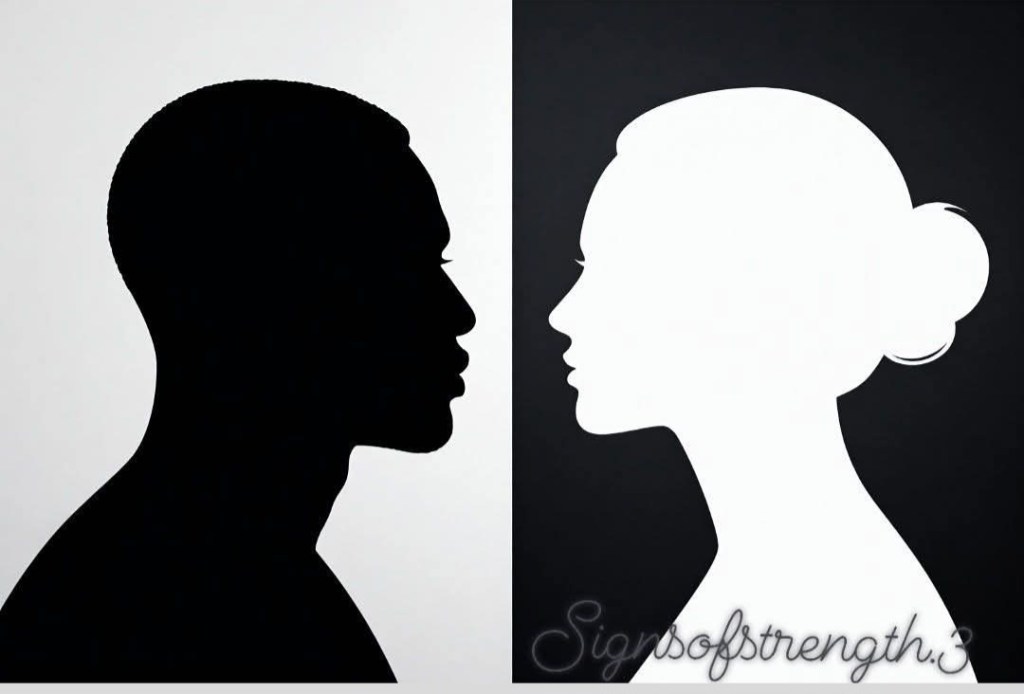
  • Black & White: Dating — Who Gets to Decide?


    Let’s Talk About It:

    Every time a Black man or Black woman dates outside their race, the internet turns into a town hall meeting nobody scheduled. Suddenly everybody has an opinion — even the people who swear they “don’t care.” Folks start projecting, debating, judging, and acting like love needs community approval before it can exist.

    But here’s the real question:

    Who actually gets to decide who someone loves — the person, or the people watching?

    Because the truth is simple:
    People date for connection.
    The internet reacts from emotion.
    And somewhere in the middle, the conversation gets messy.

    And let’s be clear — this isn’t about being racist.
    This is about culture, history, and the way certain choices hit old wounds we don’t always talk about.


    The Narrative vs. The Reality

    People love to throw out the same tired lines:

    “Black women are too strong.”
    “Black women got attitudes.”
    “Black women don’t submit.”

    But that’s not the real story — that’s the shortcut.

    Here’s what’s actually going on:

    • It’s not about Black women — America labels Black femininity as “too much” and white femininity as “soft.” That’s perception, not personality.
    • Success changes the pressure — Some Black men feel like dating a white woman signals status because this country taught them whiteness = elevation.
    • People project their insecurities — When a Black man dates outside his race, folks assume it’s a rejection of Black women, even when it’s not.

    None of this is about Black women being “too strong.”
    It’s about how America reads strength when it’s on a Black woman.


    Why Black & White Dating Still Sparks Reactions

    When a Black man dates outside his race — especially when he’s successful — it hits nerves:

    • History — Black men were once punished for even looking at white women, while Black women were ignored or erased.
    • Loyalty — Some Black women feel like, “We held you down… and now success means choosing someone else.”
    • Visibility — Black women are often overlooked in media and dating spaces, so it stings deeper.

    So when a successful Black man chooses a white woman, it doesn’t feel like “just dating.”
    It feels symbolic — even if he didn’t mean it that way.


    Where Dr. Umar Fits Into This Conversation

    Dr. Umar Johnson is a well‑known Pan‑African psychologist who believes that marriage is a political act, not just a romantic one. He argues that when Black men marry outside their race, it weakens the collective strength of the Black community.

    Whether people agree with him or not, he has become a symbol in these conversations.

    That’s why every time a Black man dates a white woman — especially a successful one — the internet jokes:

    • “Somebody check on Dr. Umar.”
    • “Dr. Umar punching the air right now.”
    • “Don’t let him see this.”

    It’s not really about him.
    It’s about what he represents:

    • Protection of Black love
    • Fear of cultural loss
    • Historical trauma
    • Community loyalty

    He’s become the internet’s shorthand for the deeper tension people feel — the tension that shows up every time interracial dating hits the timeline.


    Why Interracial Dating Still Explodes Online

    Every time an interracial couple hits the timeline — celebrity or not — the internet acts like it’s been personally invited to judge, debate, and dissect the relationship. It doesn’t matter if it’s Jamie Foxx announcing a baby, a TikTok couple posting a dance, or a random photo going viral. The reaction is instant, emotional, and loud.

    Why?
    Because interracial dating isn’t just about two people.
    Online, it becomes a symbol — a trigger — a cultural flashpoint.

    Here’s what really makes it explode:

    • People react to the history, not the couple
    • Everyone brings their own wounds
    • Social media rewards outrage
    • Interracial dating exposes insecurities
    • It challenges the idea of “ownership” in the Black community

    So when Jamie Foxx made his announcement, it wasn’t him that caused the explosion — it was everything people already felt, carried, and feared.

    He was just the spark.
    The fire was already there.


    The Viral Post Everyone’s Talking About

    Recently, a headline started circulating online claiming that a group of white women were “coaching each other” on how to secure Black athletes. The post went viral instantly — not because people knew the full story, but because the headline hit every emotional trigger at once.

    It stirred up:

    • Old fears
    • Old wounds
    • Old stereotypes
    • Old narratives

    Whether the story was true, exaggerated, or taken out of context didn’t even matter — the headline alone was enough to set the internet on fire.

    These viral posts don’t create the tension.
    They expose the tension that’s already there.


    When Black Women Date White Men — The Double Standard

    Here’s the part people pretend not to see:
    Black women get attacked too when they date white men. And the criticism hits different — not because of who they’re dating, but because of what people think it means.

    People start assuming:

    • “She gave up on Black men.”
    • “She thinks she’s better now.”
    • “She only wants a white man for stability.”
    • “She’s trying to level up.”

    But most Black women who date outside their race aren’t making a political statement.
    They’re choosing someone who treats them well.

    So why does it spark so much noise?

    Because it touches:

    • Ownership
    • Expectations
    • Projection
    • Visibility

    When Black men date white women, people call it a “pattern.”
    When Black women date white men, people call it a “betrayal.”

    Same situation.
    Different judgment.
    Same double standard.

    Black women deserve the same freedom everyone else has:
    the freedom to choose love without being punished for it.


    What the Bible Actually Says About Interracial Dating

    Let’s clear this up, because people love to throw the Bible into conversations it was never confused about.

    The Bible does not condemn interracial dating or interracial marriage.
    Not once.
    Not anywhere.

    Here’s what Scripture does emphasize:

    Spiritual compatibility matters more than skin color
    When the Bible talks about being “unequally yoked,” it’s talking about faith, not ethnicity.
    It’s saying:
    Don’t build a life with someone who doesn’t share your spiritual foundation.

    That’s about belief — not race.

    God looks at character, not ethnicity
    From Genesis to Revelation, the focus is always on:

    • the heart
    • the character
    • the fruit of someone’s life
    • the alignment of values

    Not the shade of their skin.

    The Bible actually includes interracial marriages
    People forget this part:

    • Moses married a Cushite woman — and when his family criticized it, God checked them, not him.
    • Boaz married Ruth, a Moabite woman — and their lineage leads straight to King David and Jesus.

    If interracial marriage was a sin, Jesus Himself would not come from a multi‑ethnic bloodline.

    So no — interracial dating is not unbiblical.
    What’s unbiblical is using Scripture to justify personal discomfort.


    So Who Gets to Decide?

    At the end of the day, the answer is simple:

    The people in the relationship.
    Not the internet.
    Not the community.
    Not the comments.

    People are allowed to love who they love.
    And the community is allowed to feel what it feels.

    Both can exist at the same time.

    This isn’t about hating anybody.
    This isn’t about racism.
    This is about culture, history, and the way certain choices hit nerves that were formed long before social media existed.

    What matters is that we talk about it honestly — without stereotypes, without shortcuts, and without pretending the reactions come from nowhere. Because when we understand the roots, the conversation gets clearer, softer, and a whole lot more real.

    And that’s why we’re here.
    To talk about it.
    To unpack it.
    To understand it.


    Closing Word

    May we all learn to love with clarity, not confusion.
    With honesty, not fear.
    With understanding, not assumptions.


    Closing Prayer

    God, give us the wisdom to see people the way You see them —
    beyond color, beyond culture, beyond assumptions.
    Teach us to love with clarity, not confusion.
    To honor history without letting it harden our hearts.
    To choose connection without fear, and truth without judgment.
    Cover our families, our communities, and our conversations
    as we navigate topics that are bigger than us
    but necessary for all of us.
    Amen.

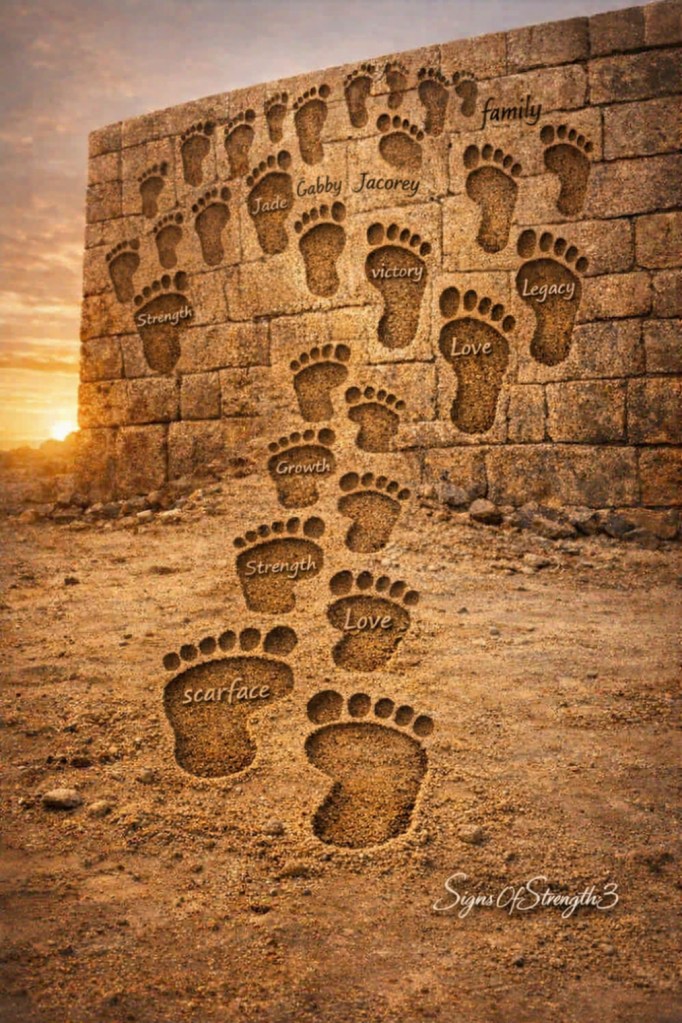
  • Footprints: The Steps We Take, The Legacy We Leave

    Let’s Talk About It

    The Meaning of a Footprint

    Our feet are not simply the pedestals on which we stand or the motors by which we move. They are the foundations of our presence in the world. Every footprint we leave behind carries a message — a blend of our humanity and the divine imprint of the One who guides our steps. Some prints show where we’ve struggled, some show where we’ve grown, and some reveal the quiet places where God carried us when we couldn’t carry ourselves.

    For years, I never paid attention to how powerful a footprint really is. But the more I studied, the more I realized: our feet tell the truth about our journey. They tell the truth about our ancestors’ journey too. Some of them walked far. Some of them stood firm. Some of them never made it to the places they dreamed of — but their standing became the ground we now walk on.

    A footprint is never just a mark in the dirt. It is evidence of existence. Evidence of endurance. Evidence of purpose.

    What a Footprint Really Is

    A footprint is the impression left by a foot or shoe on a surface. But spiritually and symbolically, it is so much more. It is the path we choose. It is the weight we carry. It is the impact we leave behind. It is the story our life is telling.

    Some people believe their feet took them far. Others are still standing in the same place — but even standing is a form of strength. Even standing leaves a mark.

    When you think about it, our feet are powerful. They carry our purpose, our pain, our progress, and our prayers. They carry the parts of us we show the world and the parts we hide. They carry the dreams we’re chasing and the burdens we’re trying to release.

    Our footprint is the proof.

    The Footprints of Our Ancestors

    Our ancestors left their footprint long before we took our first step. Their footprints weren’t just physical — they were emotional, cultural, spiritual.

    Footprints of survival.
    Footprints of sacrifice.
    Footprints of faith.
    Footprints of prayers whispered over generations.

    We are walking in paths they carved, carrying dreams they never got to finish, and living in answers to prayers they prayed.

    Their footprints didn’t end.
    They extended into us.

    The Footsteps of Those Who Came Before Us

    When I think about the power of a footprint, I can’t help but think about our ancestors — especially those who survived slavery. Many of them had nothing but their feet. No transportation. No protection. No freedom. No guarantee of tomorrow.

    All they had was the strength to run, the courage to walk, and the will to keep moving.

    Their feet carried:
    chains
    hope
    fear
    prayers
    survival
    determination

    Some ran toward freedom.
    Some walked through pain.
    Some stood their ground when standing was all they could do.

    And every one of them left a footprint behind — a mark that says, “I was here. I endured. I survived. I mattered.”

    Those footprints didn’t disappear.
    They became the path we walk today.

    The Legacy of a Footprint

    Tyler Perry once said he is living his footprint — and he has created so many millionaires that his steps will be remembered long after he’s gone. That’s the power of a footprint. It’s not about fame. It’s about impact. It’s about who rises because you walked.

    Some people leave footprints that build bridges.
    Some leave footprints that break generational curses.
    Some leave footprints that open doors for others.

    Footprints are not always loud.
    Sometimes they are quiet, steady, faithful steps that change everything.

    The Footprints Our Children Leave

    Just as our ancestors left their mark, our children are leaving theirs too.

    Some footprints are made over a lifetime, and some are made early — long before the world expects them. My oldest daughter is one of those souls whose steps have always carried purpose. At a young age, she began leaving footprints that stretched farther than her age, her size, or her circumstances.

    She was the first Black girl to win School of Rock All Star in Sugar Land, and that alone carved a path no one had walked before her. She didn’t just perform — she shifted the room. She is actively leaving her mark on the theater community — every role she steps into becomes a footprint they still talk about.

    And she didn’t stop there — she’s still going.

    She continues to leave her footprint in theater with every role she steps into. She has taken on so many impressive characters, including playing Ariel in The Little Mermaid — a role that lit up the stage and showed everyone exactly who she is. And she is still being cast, still performing, still growing, and still building a path that is uniquely hers.

    She became President of the Student Alliance, a leader whose voice carried weight, compassion, and courage. She will graduate college with a legacy already established — not because she tried to be impressive, but because she walked with intention. Every stage she stepped on, every room she entered, every challenge she faced… she left a footprint.

    A footprint of excellence.
    A footprint of resilience.
    A footprint of representation.
    A footprint of faith.

    She became a top winner at the NAACP, adding yet another mark to a path she is still building. And the beauty of it all is this: she is still young, still growing, still becoming — yet her footprints already speak loudly.

    Some people spend a lifetime trying to leave a legacy.
    Some children are born with one in their feet.

    The Footprints Still Forming

    Not every footprint is loud. Not every footprint is fully shaped yet. Some are still forming.

    My youngest daughter is discovering her own steps — learning who she is, what she carries, and what path she wants to walk. Her footprint is gentle right now, but it’s growing stronger every day.

    And my son… he slipped off his path for a moment. Life will do that. But I believe in the power of a returning step. I believe in the strength of a footprint regained. He is fighting his way back, and when he does, his story will leave a footprint worth remembering.

    Some footprints are early.
    Some are steady.
    Some are lost and found again.
    But all of them matter.

    Why One Step at a Time Matters

    And now I understand why people say, “Just keep putting one foot in front of the other.” It’s not just a motivational quote — it’s a survival strategy.

    It’s a reminder that progress doesn’t always come in leaps. Sometimes it comes in slow, steady, intentional steps. Sometimes it comes in the days when you don’t feel strong, but you move anyway. And sometimes it comes in the seasons where standing still is the bravest step you can take.

    We don’t always realize how important our feet are — not just physically, but spiritually and historically. Our feet carry our entire story. They carry our weight, our wounds, our victories, our faith, and our future.

    Every step mattered.

    The Footprint I’m Learning to Leave

    And here’s where my truth comes in.

    I’m guilty. For years, my objective was to push my oldest daughter to become everything I wasn’t. To be better. To go farther. To win where I had lost. I wasn’t trying to control her — I was trying to redeem the parts of myself I thought were too broken, too late, or too far gone.

    But life has a way of humbling you.

    I made bad decisions. I got stuck in my own way. I lost time I can’t get back. But I never gave up. And somewhere in the middle of all that stumbling, I realized something important:

    Growth doesn’t come from perfection.
    Growth comes from refusing to stay stuck.

    I can’t rewrite my past, but I can shape my footprint. I can leave a mark that my youngest daughter can stand on. I can walk in a way that shows her what strength looks like, what healing looks like, what accountability looks like, what faith looks like.

    I’m standing on my footprint now — not the one I wish I had, but the one I’m choosing to create.

    How Will You Leave Your Footprint?

    Every one of us is leaving a trail — through our choices, our healing, our faith, our mistakes, our growth, and our courage.

    Some footprints are loud.
    Some are quiet.
    Some are messy.
    Some are holy.
    Some are still forming.

    But all of them matter.

    Your ancestors left theirs.
    Your children are leaving theirs.
    You are shaping yours right now — with every step you take.

    Every step tells a story.

    What footprint will you leave behind?

    👣 👣 👣


  • ⭐ Life Lessons Don’t Belong to One Group

    LET’S TALK ABOUT IT

    We have to be willing to understand each other and keep an open mind when discussing different viewpoints.

    Many of us read books — fiction and nonfiction.
    Many of us listen to motivational speakers.
    Many of us talk to a therapist or a counselor at some point.

    The point is: we all look for something that helps us make sense of life and helps us get through it.

    I’m not here to debate or tell you what to read or who to listen to. That’s not my lane.
    The point is: we all have something that guides us.

    For me, the Bible is simply a book full of stories that reflect what I’ve seen people go through — relationships, choices, consequences, growth, betrayal, forgiveness, strength, and real‑life situations that still happen today.

    What I can say is this: every story I’ve read in scripture, I’ve seen play out in real time.
    The situations, the choices, the consequences — they’re happening around us every single day.

    It’s not about religion.
    It’s about understanding life.

    If you want a book full of human stories, lessons, and real‑world examples, I recommend it.
    Not to make you “believe” anything — but because the stories are powerful, relatable, and honest about what people face.

    At the end of the day, every story I share is meant to help somebody.
    If one person reads it and feels seen, understood, or encouraged, then I’ve done my part.

    That’s why I use scripture.
    Not to preach.
    But to connect real life to real stories that have been helping people for thousands of years.


    🔹 Tip

    When you’re trying to understand life, don’t limit yourself to one source. Let books, conversations, experiences, and even ancient stories teach you something. Take what helps you grow and leave the rest.


    🔹 Final Thought

    Life will always teach you something — but only if you’re willing to listen from more than one direction.


    🔹 Prayer

    “May we all find the wisdom we need, the clarity we’ve been missing, and the courage to learn from every story — old or new. And may understanding guide us more than fear ever could.