It’s been one week since the Oscars, and I’m still thinking about what we all watched — not the gowns, not the speeches, but the message underneath the whole night. The part we keep pointing out. The part that keeps coming back no matter how many times we call it out.
And the truth is, people have been speaking out about this for years. Directors, actors, critics, fans — everybody sees the pattern. It’s a fight we keep bringing up because it keeps showing up. Spike Lee has been calling it out for decades, long before social media had the language for it. And yet here we are again, watching the same story play out in real time.
And Here We Are Again
We can be excellent, and still questioned.
We can be first, and still overlooked.
We can be groundbreaking, and still expected to “prove it again.”
We can be talented, and still judged harsher when we slip.
And that’s the part we keep bringing up — because it keeps happening.
Why the Best Picture Win Doesn’t Always Follow
Across multiple years, critics and industry insiders point to three recurring reasons:
• Politics inside the Academy — long‑standing voting blocs, generational divides, and internal biases shape outcomes more than people realize.
• “Safe” choices vs. bold art — the Academy often gravitates toward films that feel familiar or less risky, even when another film is clearly stronger in craft, storytelling, or cultural impact.
• Campaign power — studios with bigger budgets, louder marketing, and stronger influence often sway voters more effectively than the films that actually delivered the best work.
And that’s why you’ll see a film sweep technical categories and writing…
but lose Best Picture to something more “comfortable” for the voting body.
A recent example mirrors the pattern:
In 2026, One Battle After Another won Best Picture, even though the race was tight and another film (Sinners) was equally deserving and winning major categories. The final outcome reflected industry politics and preference, not just craft.
That’s exactly the kind of inconsistency Spike Lee has been calling out for decades — not because it’s about one group or one moment, but because it’s a pattern baked into the system itself.
And Then the Night Took a Turn — Because Golden Hit the Stage
Let’s be real: the performance wasn’t strong.
Every singer can’t sing live, and that moment showed it.
But here’s what caught my attention — not the vocals, but the reaction.
Some people online were calling it “vulnerable” and “real,” almost like the lack of polish made it more artistic. A few even compared it to the raw emotion you see in some K‑Pop stages.
And listen… that’s fine.
Everybody’s allowed to enjoy what they enjoy.
But let’s not pretend we don’t see the difference in how people respond depending on who is on that stage.
Because if certain artists had delivered that same level?
The internet would’ve been on fire.
Memes. Threads. Think‑pieces.
People would’ve been dragging them before the mic cooled off.
But that night?
Silence.
Soft takes.
Gentle excuses.
That silence said everything.
This Part Hits Home for Me
My daughter is in this business, and it’s not easy.
She sings beautiful songs, she acts, she performs — she’s a star in her own right.
But she still has to work ten times harder just to be seen.
She doesn’t get the luxury of a bad night.
She doesn’t get to go viral for doing something silly or off‑key.
She has to be polished, prepared, and consistent in ways others don’t.
She’s already in these rooms.
She’ll be around these people.
And one day, she’ll be at the Oscars or the Grammys herself — standing on those same stages, delivering excellence the way she always has.
But the path she has to take to get there?
It’s steeper.
It’s louder.
It’s judged more harshly.
And that’s why this whole conversation matters to me on a different level.
The Heart of the Piece
We as Black Americans come so far, but yet we are still fighting and have to prove ourselves.
And that’s the heart of this whole piece.
Because this isn’t about music.
This isn’t about the Oscars.
This is about the pattern across every industry:
- We can be excellent, and still questioned.
- We can be first, and still overlooked.
- We can be groundbreaking, and still expected to “prove it again.”
- We can be talented, and still judged harsher when we slip.
This is a truth many people feel but don’t say out loud.
Reflective, Honest, and Thoughtful
So will it get better? Maybe.
But here’s what I know for sure:
Every time we speak on these patterns, somebody calls it “complaining.”
Every time we point out the inconsistency, somebody says we’re “making everything about race.”
But deep down, everybody knows exactly what it is — they just won’t all admit it.
And that’s why we keep talking.
That’s why we keep calling it out.
Not because we want to argue, not because we’re looking for a fight, but because silence never protected anyone anyway.
We’ve come too far, worked too hard, and broken too many ceilings to pretend we don’t see what we see.
And if speaking the truth makes some people uncomfortable…
that’s a them problem, not ours.
What We Know for Sure
“Excellence has never been our problem — being seen for it has.
And we don’t speak up to complain; we speak up because silence never changed a thing.”
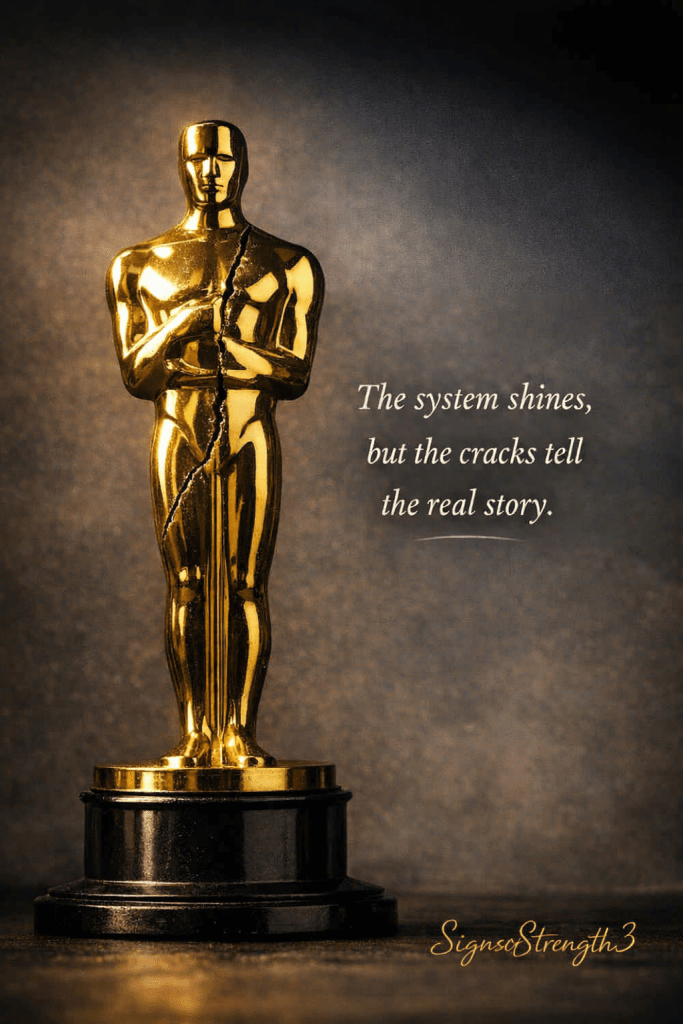
God, give us the courage to speak truth with grace, the wisdom to see beyond what shines, and the strength to keep showing up even when recognition falls short. Cover every artist, every child, and every dreamer who feels unseen. Remind us that You measure what the world overlooks. Amen.
 SignsOfStrength
Leave a comment